
Showing posts with label geopolitiks. Show all posts
Showing posts with label geopolitiks. Show all posts
Tuesday, September 3, 2013
Syria, Egypt Strife Sparks Surge In Cyber Attacks

Sunday, June 17, 2012
Stuxnet: Anatomy of a Computer Virus
from brasschecktv.com: Developed under George W. Bush. Unleashed upon the world by Barack H. Obama. Re-engineered by America's adversaries. The next can of worms is already open...
Saturday, October 1, 2011
supercomputer predicts revolution through 'culturomics'
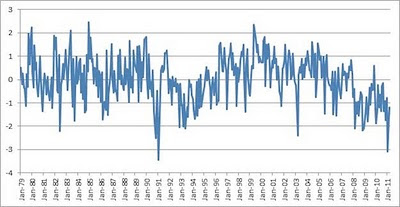
The software sifted through news reports from nearly every country in the world. Major sources were from the global news databases such the US government-run Open Source Center which provides foreign open source intelligence, Britain’s equivalent BBC Monitoring, as well as the New York Times’ archive that dates back to 1945. In all, the body of data included over 100 million news articles. The story elements were woven together into a mind-boggling web of 100 trillion relationships. To crunch the massive amount of data the SGI Altix supercomputer Nautilus was enlisted. Its 1024 Intel Nehalem cores give it a total processing power of 8.2 teraflops (trillions of floating point operations per second).
The strategy for pulling out relevant information included two main techniques. ‘Sentiment mining’ involves counting the number of words in a document that are categorized as positive, such as “good” or “nice,” or negative, such as “terrible” or “horrific.” Changes in the tone of a regions’ news documents over time correlates with the sentiment of the people in that region. A major dip in tone, as when the frequency of negative terms rapidly increases, means the natives are getting restless. An unprecedented dip could spell revolution. The second technique, called ‘full-text geocoding,’ matches sentiment to geographic locations.
Subscribe to:
Posts (Atom)