Pages

Showing posts with label corbett report. Show all posts

Monday, June 24, 2013

Whistleblower: #NSA Wiretapped Obama, Petraeus, Alito & Others

from Boiling Frogs Post: Last week, during exclusive interviews with Boiling Frogs Post and Corbett Report, NSA whistleblower Russell Tice revealed first-time-ever shocking new details of the NSA spying scandal. In addition to detailing how the NSA is collecting and storing the content of all electronic communications passing through the United States, he also revealed for the first time some of the specific targets of past NSA wiretapping operations, including senior Congressional leaders, the former White House Press Secretary, high-ranking military generals, the entire Supreme Court, and even then-Senator from Illinois and future President, Barack Obama.


Listen to the full-length revelatory interview: Click Here

Listen to Sibel Edmonds’ commentary on Tice revelations and more: Click Here

Stay tuned for continuing coverage of the case this week on BoilingFrogsPost.com

Wednesday, June 19, 2013

Nothing to Hide, Nothing to Fear

from The Corbett Report: "If you have nothing to hide, then you have nothing to fear."

We've all heard this argument a million times when talking to people about the latest revelations of government snooping or the latest roll-out of creepy Orwellian technology. The implication is that the only people who complain about having their privacy violated are criminals who deserve to have their privacy violated. It is a simple phrase, learned by rote, that is meant to bring the conversation to a close.


We all know that this is argument is fundamentally flawed, but sometimes it is difficult to argue the point with someone who insists that they are fine with seemingly any level of government intrusion in their personal lives...

Sunday, October 14, 2012

Weather Warfare Explained

Weather Warfare Explained
James Corbett interviews Michel Chossudovsky, Rosalind Peterson, Michael Murphy and G. Edward Griffin on subject of chemtrails, geoengineering, environmental modification and weather warfare in episode 237 of Corbett Report Radio. Chossudovsky reminds listeners weather warfare employed as far back as Vietnam War, where US turned Ho Chi Minh Trail  to mud and impassable under Operation PopeyeAn excellent history of Weather Warfare, is available, at New World War website. In 1996, Air Force released report:  "Weather as a Force Multiplier:  Owning the Weather in 2025," since cleared to the public, we can only imagine what remains classified? Corbett has it right, we have little idea what weather weapons are available and in use today! Corbett registers surprise in episode at following  Yahoo article not being suppressed, "Could Iran's Enemies Really Be Destroying Its Rain Clouds?" The present writer remembers Romania making similar allegations, in 2007, against Russia!  Please listen to an important episode, "Weather Warfare Explained," at The Corbett Report.

Monday, August 20, 2012

Video game publisher pulls real weapons promotion

from smh.com.au: Electronic Arts has pulled a charity promotion that involved the sale of actual weapons featured in the first-person shooter game Medal of Honor.

This year, the game publishing giant teamed up with weapons manufacturers to create Project Honor - a fund-raiser that aimed to "benefit the families of special operations warriors".

As a part of the deal, arms makers had their weapons featured in the game and also produced merchandise that included actual weapons, the sale of which would benefit various war charities.

Medal of Honor - Warfighter's offical website, originally had links to the arms manufacturers' websites, where people could buy weapons, such as the "Voodoo Hawk" Tomahawk, which features an "extending cutting head". These have since been taken down after numerous complaints from both within and outside the gaming community about the promotion of the sale of deadly weapons on the game's website.

"We've been working with those partners because we wanted to be authentic, and we wanted to give back to the communities," Medal of Honour executive producer Greg Goodrich told gaming website Eurogamer.

Despite public outcry, it is understood that the partnerships between Electronic Arts and the arms manufacturers are still in place; the weapons are just not being promoted on the Medal of Honour of website.

Related Stories:
Who's Gaming Who? - from The Corbett Report
US military is meeting recruitment goals with video games – but at what cost?

Sunday, December 18, 2011

corbett report radio #22: false flag scenario - drone attack on US soil

corbett report radio #22: false flag scenario - drone attack on US soil
James Corbett suggests next false flag, possibly, drone attack on United States in recent Corbett Report Radio broadcast. Corbett reminds listeners, last year, US Navy drone - a Fire Scout wandered over Washington DC airspace. Also, the recent report that software at Creech AFB, NV running drones hit with virus infection. Iran also reported capture of CIA drone within its borders. Finally, the precedent-setting arrest of US citizens in North Dakota, this summer, after drone assisted in intel gathering. Corbett suspects, along with many others, the table is set for a false flag with any number of varied plausible denials. The denials could range from Islamic attack by Iran with a cloned drone or one hijacked through "software glitch". The present writer can only agree and drones could be in skies above your cities soon! Corbett Radio Report #22 is persuasive and a must listen!

Saturday, February 6, 2010

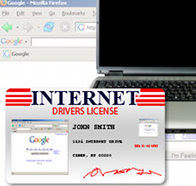
the rising tide of internet censorship

will recent successes in fighting internet controls be enough to stave off tyranny? it depends largely on public outcry...
the rising tide of internet censorshipfrom corbett report: The focus is back on Internet censorship this week as a pair of articles from Time Magazine and The New York Times came out almost simultaneously advocating for licences to operate web sites. These articles were skillfully skewered by Paul Joseph Watson as lame attempts to shore up a disintegrating establishment media in the face of a blogosphere that is increasingly replacing them.

The articles follow on calls by Craig Mundie—Microsoft's chief research and strategy officer—for an Internet licencing system. Introducing the idea, he said "We need a kind of World Health Organization for the Internet." Evidently unaware of the ongoing investigation into the WHO's role in manufacturing the H1N1 pandemic hoax to line the pockets of Big Pharma, Mundie added that an international Internet authority should be given the same kind of authority that the WHO has in dealing with a pandemic. "When there is a pandemic, it organizes the quarantine of cases. We are not allowed to organize the systematic quarantine of machines that are compromised." These calls are worrying because they represent only the latest instance of influential figures proposing increasingly tyrannical controls on free speech on the Internet.

The Obama presidency has seen an increase in hype over cybersecurity threats, with the influential CSIS "think tank" having written white papers proposing cybersecurity as a key issue for the 44th president. As we reported last July, CSIS argued for "minimium standards for securing cyberspace" because "voluntary action is not enough."

Shortly after Obama took office last year, Senator Jay Rockefeller introduced a Senate bill (S.773) that would give the president the power to "declare a cybersecurity emergency" and shut down the Internet. The bill would also require network administrators in the private sector receive licencing from the federal government after taking a federally-mandated certificagtion program. During Committee hearings, Rockefeller went so far as to say that it would have been better if the Internet had never been invented.

In November of last year it was reported that an Anti-Counterfeiting Trade Agreement (ACTA) being negotiated by the world's leading economies would force ISPs to cut off subscribers who were found to have shared copyrighted content on more than two occasions. Recent reports indicate that this proposal was not discussed at an ACTA meeting last month, but the so-called "three-strikes rule" has already passed in France.

Earlier this year, it was revealed that Obama's information czar, Cass Sunstein, has blamed the blogosphere for spreading anti-government sentiments and advocated that the government actually employ people to infiltrate online communities and spread information favorable to the government in an effort to destabilize them. As remarkable as such a proposal may seem from a high-ranking government official, it is only one aspect of an official Pentagon strategy to fight the net as if it were an enemy weapons system.

All of these proposals and numerous other stories we have reported on the past (e.g. here and here) represent only the latest attempts to stifle free speech on the Internet. Although groups like the Electronic Frontier Foundation have been fighting such moves for a long time, the explosive power of the online community in derailing the carbon eugenics agenda and exposing the Federal Reserve has awakened many to the nascent medium's potential...and its value. The value of the Internet is directly tied to freedom of speech, a principle that is opposed solely by the establishment media who thrived for decades in a virtually competition-free era before the rise of the Internet. As one commenter on the Time Magazine puff piece calling for Internet licencing notes, "There is NO grass roots movement anywhere calling for government intervention in the internet. It is not broken. It works too well, that is a problem for tyrants."

As with everything related to the Internet, however, the collaborative efforts of concerned citizen in opposing Internet censorship is paying off in positive developments. The newfound awareness of the Internet's power and importance is raising awareness that online liberties are in fact fundamental rights that cannot be taken away. Even China was forced to back down from an Internet licencing scheme (exactly like that proposed at Davos) because of public pressure. A draconian Australian law that would have required all online political comments to be accompanied by the commenters full name and address is likely to be repealed by the Attorney General.

Whether or not these individual successes in fighting back the approach of online tyranny will ultimately derail the establishment's agenda remains to be seen. It depends largely on public outcry over the loss of online liberties becoming a genuine grassroots movement.

Thursday, September 17, 2009

some thoughts on losing the internet

what online activists should do to prepare for worst-case scenario
some thoughts on losing the internet: what online activists should do to prepare for worst-case scenariofrom corbett report Yesterday morning my worst nightmare was realized: I turned on my computer, opened my internet browser and...nothing happened. Then, after an excruciatingly long time in which nothing stubbornly continued to happen, something bad happened: an error message popped up to tell me that the connection to the server at corbettreport.com could not be found. In the two years I've been running the site I've never been unable to connect to the server before. Thinking it may have been a server problem with my web host, I tried to check YouTube. And my email. I was so desperate I even tried CNN. But each time the same error taunted me: server not found. My internet connection was down.

Was this a problem with my modem? My internet provider? Was the internet down in my part of Japan? The whole country? Ironically enough, my first reaction in such a situation is generally to check the internet for answers, but what do you do when you don't have the internet? Well, given that it was 6:00 A.M. there wasn't much that I could do. And even if it had been regular business hours, as an English speaker in Japan it's not quite as simple as just phoning up your ISP. There's a special English help line the number for which I would have had to look up (you guessed it) online.

All at once the prospect of a day without the internet spread out before me in all its horror: No emailing anyone to set up interviews for my podcast. No interviews for that matter (I conduct them by Skype and record them to my hard drive). No checking the news...the real news, I mean, not the corporate pabulum that is spoonfed to the masses via TV. It was a good thing I already had my mp3 player loaded up with podcasts, otherwise I would have had to resort to...what? Staring blankly out the window of the train on the way to work like my fellow passengers? Well, no, I could have brought a book, but I suddenly realized why so many people complain about their commute rather than look forward to it as the highlight of their working day. Personally, I'd much rather listen to MediaMonarchy.com than sit at my desk pretending to look busy.

Of course, if anyone is aware of just how important the internet is or just how much is at stake if we were to lose it, it's me. Having produced video after video and article after article and podcast episode after podcast episode on the subject, I understand that the powers that be are threatened by this technology and desperately want an excuse to start clamping down on it (as they already have done in country after country). That's why it's vital that people oppose legislation that threatens their online freedoms, or even—as in the case of the recently re-introduced Rockefeller-sponsored cybersecurity bill—gives the White House the power to shut down the internet.

some thoughts on losing the internet: what online activists should do to prepare for worst-case scenarioBut still, knowing something intellectually and actually experiencing it are two different things. In the end, it turns out the entire incident was the result of a billing mistake that was quickly resolved, but it has nonetheless brought many of the issues around internet freedom and activism into sharp focus for me. We cannot take the internet for granted and we all have to prepare for the possibility that it might not be here tomorrow. To that end, I offer this list of simple steps every activist can take in the event that our main form of communication is suddenly severed, for whatever reason.

Save all files locally: This may seem like an obvious idea, but it bears repeating, especially as we move into an era of "cloud computing." If you need a copy of a document that you've created, you should never assume you'll always have access to it through the internet...even on your own website. Save a copy on your hard drive, external drive, CD, DVD or somewhere where you will always have access to it.

Download all important infomation: When you see an important news story, download an html copy to your hard drive. This is very easy to do in any internet browser and only takes a few seconds, but it insures that important information cannot be permanently flushed down the memory hole. Also, if you see a good video, don't just passively enjoy it and don't bank on its being available the next time you click on it (especially given YouTube's propensity for taking down politically-sensitive material these days). Visit websites like Keepvid.com or use Firefox extensions like Download Helper to make sure you can store a copy on your hard drive. Also, never use email as a way of storing contacts, phone numbers, and other important information...as I have until now.

Build up your offline network. As great as the internet is, it is only a tool for connecting people. If you spend as much time building up contacts offline as you do online (even just swapping phone numbers with important contacts) then you can help to mitigate the effect of an internet outage. Besides, your mother was right: it's a beautiful day outside and sometimes you just need to take a break and get some fresh air.